
How Plaque Becomes Tartar and Why It Matters
You know that fuzzy feeling your teeth sometimes have when you wake up in the morning or when it has been a while since you brushed? That is a little reminder that plaque is always trying to make itself at home. Fortunately, your toothbrush and floss are pretty good at showing it the door. But when plaque hangs around too long, things get a little trickier. It can harden into tartar, and once that happens, brushing and flossing at home are no longer enough to remove it. So, what exactly is happening in your mouth, and why do we care so much about keeping plaque and tartar under control?
Plaque Is Constantly Forming
Plaque is a sticky film of bacteria that forms on your teeth throughout the day. Everyone gets it, even those of us who are very good about brushing and flossing. When plaque is not removed regularly, the bacteria it contains can contribute to tooth decay and irritate your gums. That is why your daily home routine matters so much.
Brushing helps clean the surfaces of your teeth, while flossing or another form of interdental cleaning gets into those spaces your toothbrush cannot easily reach. The goal is simple: remove plaque before it has a chance to cause trouble.
How Does Plaque Become Tartar?
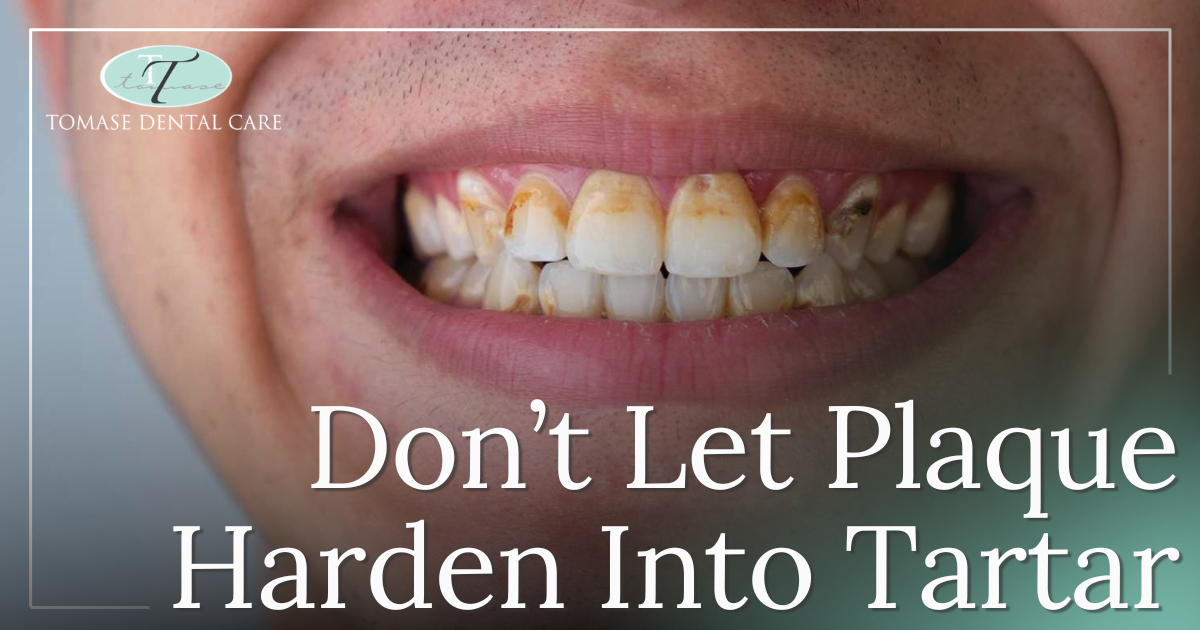
When plaque remains on your teeth for too long, minerals in your saliva cause it to harden. That hardened buildup is called tartar, or dental calculus. Plaque can be removed with simple brushing and flossing. Tartar can’t.
Once tartar has formed, it bonds firmly to the tooth surface and needs to be removed professionally. That is one of the reasons we recommend regular cleanings even when you are doing a great job taking care of your teeth at home.
Why Your Gums Care About Tartar
Tartar does not just affect the way your teeth look or feel. When it collects around the gumline, it contributes to inflammation and gum disease. Our professional cleanings remove both plaque and tartar buildup and help protect your teeth and gums. You might notice that your gums look red, feel tender, or bleed when you brush or floss.
It can be tempting to avoid an area that bleeds because you do not want to irritate it further, but bleeding gums are something we want to know about. Rather than ignoring the area, let us take a look and figure out what is going on.
“But I Brush Every Day!”
We hear you, and brushing every day is absolutely important. The problem is that even a really good toothbrush can’t reach every little spot. Plaque loves areas between teeth, around the gumline, and other places that are easy to miss. That does not mean you are doing anything wrong.
Think about professional cleanings as a reinforcement for your home routine. You take care of your smile every day, and we periodically step in to clean the areas that are harder for you to reach and remove tartar that your toothbrush can’t.
A Healthy Mouth Is About More Than Clean Teeth
We also want you to remember that taking care of plaque and tartar is not simply about having teeth that look clean. We take a whole-health approach to dentistry because what happens in your mouth is connected to your overall well-being. Keeping your teeth and gums healthy is an important part of taking care of yourself as a whole. That is why prevention matters so much to us. If we can help you keep your mouth healthy and catch changes early, that is always a good thing.
Keep Doing the Little Things
There is no secret trick for keeping plaque under control. It really comes back to the everyday habits you already know. Brush thoroughly. Clean between your teeth. Keep up with your regular professional cleanings. If your gums start bleeding, your teeth feel different, or something about your mouth has you wondering, tell us. You do not have to wait until something hurts to ask a question.
If it is time for your next cleaning or dental exam, we would love to see you. Reach out to our office located in Toledo, OH, to schedule your next appointment. We will help you keep plaque and tartar in check so you can keep your smile feeling fresh, healthy, and comfortable.