
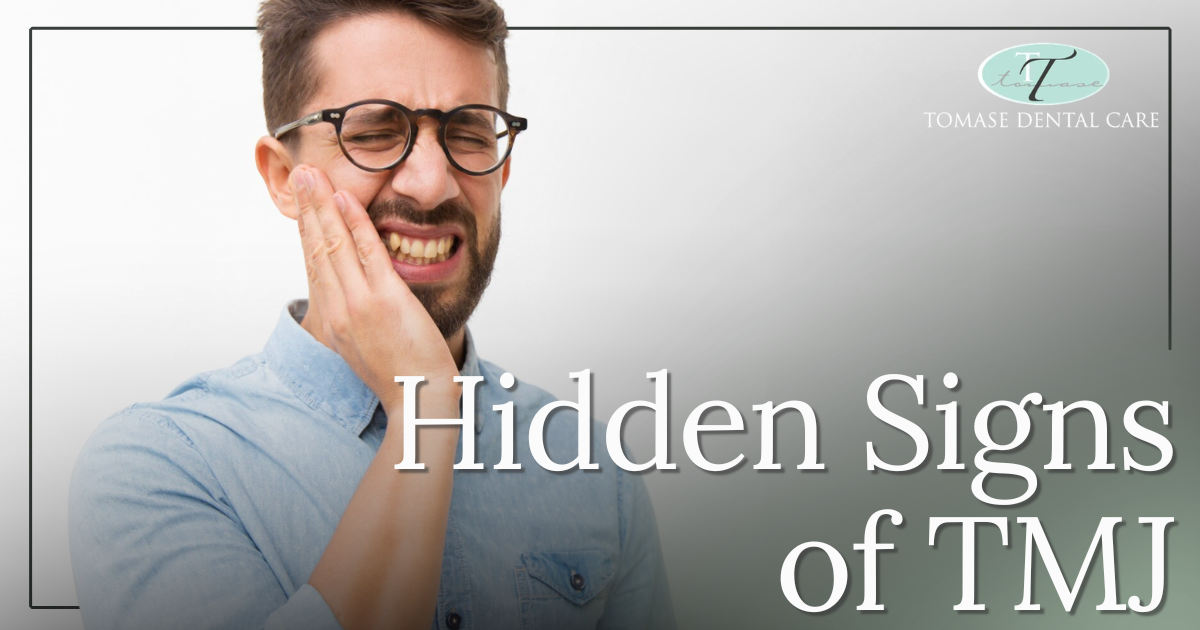
TMJ Symptoms: The Small Signals Your Jaw Has Been Sending
A click when you open your mouth wide, a little tension near your ears, a headache that keeps showing up right at your temples: these seemingly small things are easy to brush off or attribute to a bad night’s sleep or too much stress. But your jaw is one of the busiest joints in your body, and when something is off, it tends to make itself known in quiet, persistent ways. That’s usually how TMJ symptoms begin.
What TMJ Refers To
The temporomandibular joint, or TMJ, is the hinge connecting your jaw to your skull, sitting just in front of each ear. It’s what allows you to open, close, and shift your mouth from side to side. When everything functions the way it should, you never think about it. When the joint or surrounding muscles become strained, symptoms start showing up, often in ways that feel unrelated, vague, or easy to dismiss. Dentists and doctors refer to this condition as TMD (temporomandibular disorder), though most patients simply call it TMJ.
The Symptoms People Often Miss
TMJ issues rarely manifest all at once. They tend to build gradually until the pattern becomes hard to ignore. Some of the most common signs include:
- A clicking or popping sound when opening or closing your mouth
- Jaw stiffness, especially in the morning
- Pain or tenderness near the ears or along the jawline
- Headaches
- A sensation that your bite is slightly off
None of these feels urgent on its own. Together, they tell a story.
Why TMJ Happens
TMJ symptoms rarely have a single cause, which is part of what makes them tricky to identify. Teeth grinding or clenching, often during sleep, puts enormous pressure on the joint over time. Stress plays a role, too, keeping the muscles around the jaw tense for longer than they should be. Bite alignment is another factor. When your teeth don’t come together evenly, your jaw compensates. Even posture matters, since long hours leaning forward at a desk can shift how your jaw and neck interact.
The Part That Often Gets Missed
Because the temporomandibular joint sits so close to other structures, irritation doesn’t always stay where it starts. Headaches, ear discomfort, and neck tension can all be connected to jaw strain, even when they feel completely unrelated. This is one reason TMJ symptoms sometimes get misread as something else entirely.
What Can Help
Many TMJ symptoms respond well to consistent, straightforward management, and treatment doesn’t have to start with anything complicated. A custom nightguard can reduce grinding during sleep. Gentle exercises help relax and strengthen the jaw muscles over time.
Building awareness of daytime clenching and making small adjustments to posture and daily habits also goes a long way. Most people begin here, and for many, these changes make a genuine difference.
What Improvement Feels Like
With treatment, the clicking becomes less noticeable, the tension softens, you wake up without that tight, locked-up feeling in your jaw, and your mouth opens more comfortably throughout the day. Headaches also become less frequent. It’s a gradual return to normal, the kind you might not notice right away until you realize things have been better for a while.
TMJ symptoms build quietly. The sooner you pay attention to the small signals, the more manageable they tend to be. And sometimes, all it takes is a little support and a bit less strain. Call Tomase Dental Care located in Toledo, OH. We would love to hear from you.